How to tell if silk is real: textile composition labels and the difference between natural and artificial silk
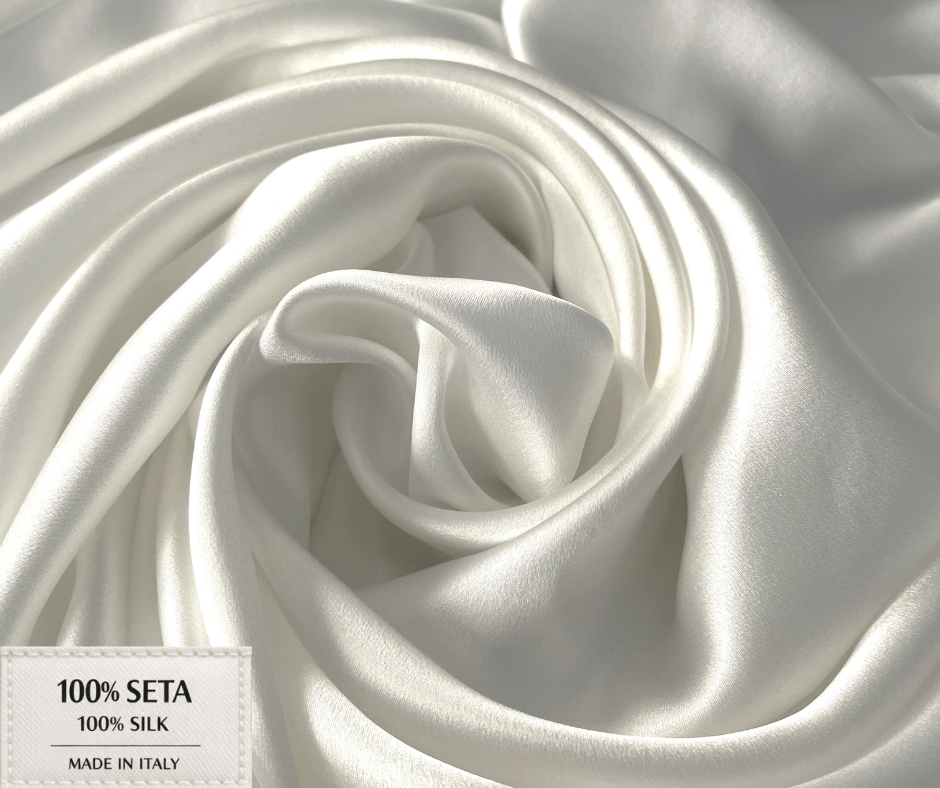
How to Tell If Silk Is Real: 100% Silk Label and Real vs Fake Silk Guide
Understanding how to tell if silk is real is becoming increasingly complex. The textile sector—particularly the premium luxury, bedding, and high-end apparel markets—now promotes many “innovative” fibers that, sometimes deliberately, create confusion and misinformation for consumers. Learning how to identify real silk and distinguishing between natural silk and artificial silk requires careful attention to fabric labels and the correct fiber naming.
Accurate fiber composition and the clear, non-misleading fabric label are not only legal requirements but essential tools for transparency and consumer protection. They help determine whether a product is real silk, silk fabric, silk filling, or made from alternative fibers. Fabric labelling therefore plays a central role in both transparency and product value.
The improper or ambiguous use of silk-related terms creates confusion and unrealistic expectations. Many consumers try to understand the difference between silk and viscose, synthetic silk, or how to spot fake silk, but encounter misleading names that, in the most serious cases, may constitute unfair or fraudulent commercial practices.
Understanding fabric labeling is essential to recognize real silk and distinguish it from alternative materials. Only natural silk offers specific qualitative characteristics, while many artificial or regenerated fibers use evocative naming to suggest properties they do not actually have.
How to Tell if Silk is Real from the Labels: 100% Silk Label Guide
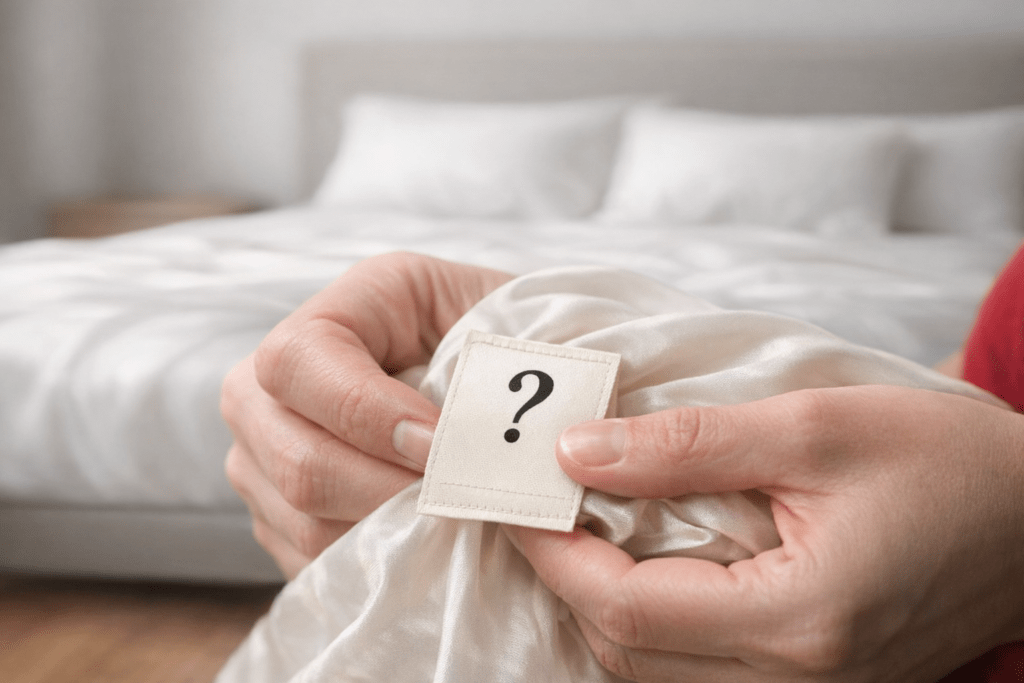
To tell if silk is real, carefully read the silk label or the fabric label on the product. A textile item can be defined as silk only if it clearly states “100% silk.”
Key elements to check:
- check the official fiber name “silk” on the label
- verify the presence of “100% silk” or “pure silk”
- avoid viscose, rayon, polyester, or synthetic fibers
- verify the percentage composition of fibers
Terms such as “artificial silk”, “vegan silk,” or “bio silk” do not indicate natural silk, but alternative fibers.
How to Read Fabric Labels for Silk: What to Check
A fabric label on a garment, bedding product, or accessory serves several essential functions:
- Informational – provides details on the types, nature, and percentages of fibers
- Legal – ensures compliance with regulations on composition and traceability (EU Regulation 1007/2011, FTC rules in the USA)
- Value-related – communicates quality, origin, and manufacturing location, defining product positioning
For silk, clarity, precision, and compliance are crucial, especially as the term “silk” is increasingly used in an evocative rather than technical sense. Historically, viscose and rayon—artificial fibers—were even introduced as so-called “artificial silks.”
EU Textile Labeling Law: Rules for Textile Labels and Silk fiber
Regulation (EU) No. 1007/2011 defines the legal framework for textile labeling in Europe. It is currently under revision, with potential updates regarding fiber nomenclature, origin specifications, mixed fiber compositions, and tolerance rules for “100%” claims.
Understanding how to recognize real silk and the characteristics of natural silk compared to other textiles is therefore essential.
Article 1 – Subject Matter and Scope
Article 1 establishes the legal basis for mandatory textile labeling, covering:
- rules for indicating textile fibers
- application to all textile products placed on the EU market
- all sales channels, including distance selling and e-commerce
Articles 4 and 5 – Fiber Composition and Naming
These articles define how textile products must indicate fiber composition:
- information must be complete, accurate, and provided before purchase
- only official fiber names listed in Annex I may be used
- non-recognized fiber names are not permitted
Annex I point 4 defines silk as:
“a fiber obtained exclusively from silk-secreting insects.”
The term “silk” may only be used for natural animal-derived silk fiber and not for regenerated, artificial, or bio-based fibers.
Articles 7 and 16 – Naming Rules and Additional Information
Textile fibers must be described according to strict rules:
- they cannot be replaced by similar names
- they must not be used in an evocative or misleading way
- additional information is allowed only if it does not contradict mandatory information
The ambiguous use of terms such as silk, silky, or similar expressions for non-silk fibers is not permitted, nor is the use of prefixes or suffixes such as vegan, bio-based, or sustainable if misleading.
US Textile Labeling Laws: FTC Rules and Textile Fiber Act for Silk and Fabric Labels
The Textile Fiber Products Identification Act (TFPIA) regulates textile labeling in the United States through textile rules enforced by the Federal Trade Commission (FTC). Proper labeling is essential for regulatory compliance and brand reputation.
Textile products in the US must:
- provide truthful, clear, and non-deceptive fiber composition
- use only FTC-recognized fiber names
The law explicitly prohibits misrepresentation and deceptive labeling, including the improper use of terms such as “silk” for non-silk fibers.
Violations can result in enforcement actions, financial penalties, and product recalls.
EU Vs US Textile Labeling: Key Difference for Silk Products and Textile
Both the EU and the United States aim to ensure transparency, textile composition and consumer protection, but their approaches differ:
- the EU adopts a harmonized, prescriptive system with official fiber naming rules
- the US follows a principle-based approach focused on preventing deceptive practices
Brands must ensure compliance in both markets to reduce risks.
In both systems, misuse of the term “silk” is considered misleading and illegal:
- the EU prohibits non-recognized terms upfront
- the US evaluates misleading claims case by case
What Does 100% Silk Mean? Real Silk Fiber Explained
The term “100% silk” refers exclusively to a natural animal fiber produced by silkworms (Bombyx mori or other species), composed of the proteins sericin and fibroin, with the following characteristics:
- natural animal-derived fiber
- protein-based fiber
- high mechanical strength
- excellent breathability and thermoregulation
- superior durability and comfort
- legally recognized fiber designation
According to Article 7 of Regulation (EU) No. 1007/2011:
Only a textile product made entirely from a single fiber may be labeled “100%,” “pure,” or “all.”
Therefore, “100% silk” can only be used when the product contains exclusively natural silk fiber.
Fake Silk Names: Misleading Terms: How to Identify Artificial Silk and Misleading Labels
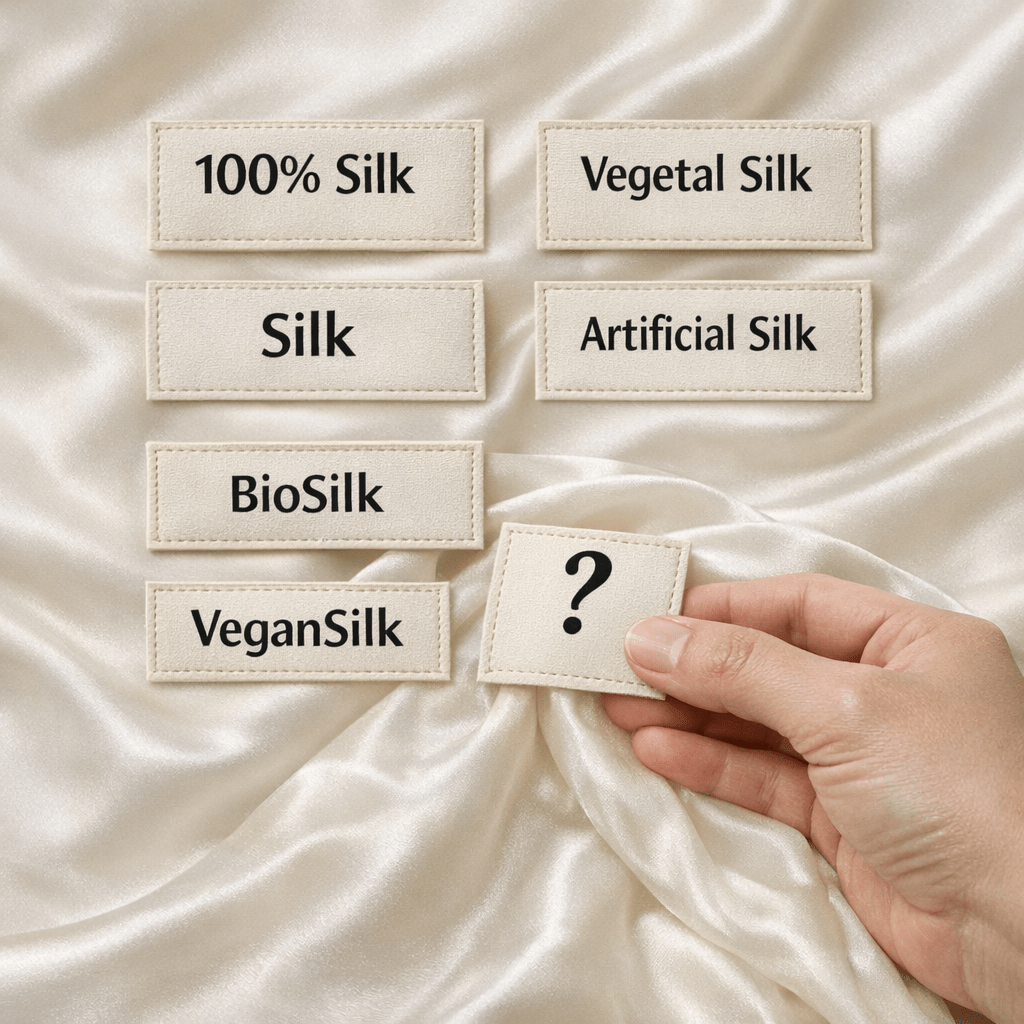
In textile products, the improper use of the term “silk” is widespread, and many of these names refer to fake silk rather than real silk. Many users search online for “what is artificial silk” or “difference between silk and viscose” reflecting a growing confusion generated by incorrect naming, but also an increasing demand for information. Below are some examples of misleading denominations that make it difficult to recognize real silk.
Artificial Silk (Rayon): Why It Is Not Real Silk
Artificial silk was the first intentionally created source of confusion, used at the end of the 19th century to refer to viscose or rayon. Due to the risk of counterfeiting, the use of the term “artificial silk” was later prohibited; however, it can still occasionally be found in some products today.
Artificial silk is not natural silk.
BioSilk / Bio-based Silk
Fibers described as “biological” or “bio-based” produced using various natural raw materials, are not derived from silk-producing insects. They may originate from cellulose, starches, or polymers processed through chemical treatments.
BioSilk or bio-based silk is not natural silk.
Vegan Silk: What It Really Means
Vegan silk is, in most cases, a purely commercial term. Unless referring to very specific types of wild silk, it is generally used to indicate fibers free from animal-derived components. These may be synthetic, artificial (viscose), or plant-based.
Vegan silk is not natural silk.
Vegetal Silk / Bothanic (Botanic) Silk
Vegetal or botanic silk refers to plant-based fibers (for example from bamboo, eucalyptus, or corn) processed through chemical treatments and extrusion to imitate the appearance of silk. Many types of viscose fall within this category.
Vegetal or botanic silk is not natural silk.
Fermentation Silk
Fermentation silk originates from protein-based fibers produced through biotechnological or fermentation processes. These materials may present critical issues related to durability over time, structural stability at moderate temperatures, technical performance, odor development, and scalability.
Fermentation-derived silk is not natural silk.
Protein Silk: Is It Real Silk?
Protein fibers contain—or more precisely derive from—proteins (sometimes obtained from milk, soy, or synthetic processes). However, it is still difficult to provide clear assessments of their production processes due to a lack of transparent and reliable information.
Protein-based silk is not natural silk.
This wide range of denominations contributes to consumer confusion and makes it more difficult to distinguish natural silk from artificial, synthetic, or newly marketed “innovative” or “sustainable” fibers.
How to tell if silk is real, Choose Real Silk: Labels, Quality, and Transparency
Cosetex is committed to helping consumers understand how to tell if silk is real, while enhancing the value of 100% natural silk through transparency, accurate labeling and full traceability of raw materials supporting authentic Made in Italy production.
Cosetex’s silk products enable consumers to clearly recognize the quality of pure silk:
- Silk cocoons and silk waste
- Silk carded sliver and combed silk
- Silk yarns
- Silk padding
- Innovative silk
Many consumers search for how to identify real silk, how to check silk authenticity, or how to spot fake silk when comparing different fabrics.
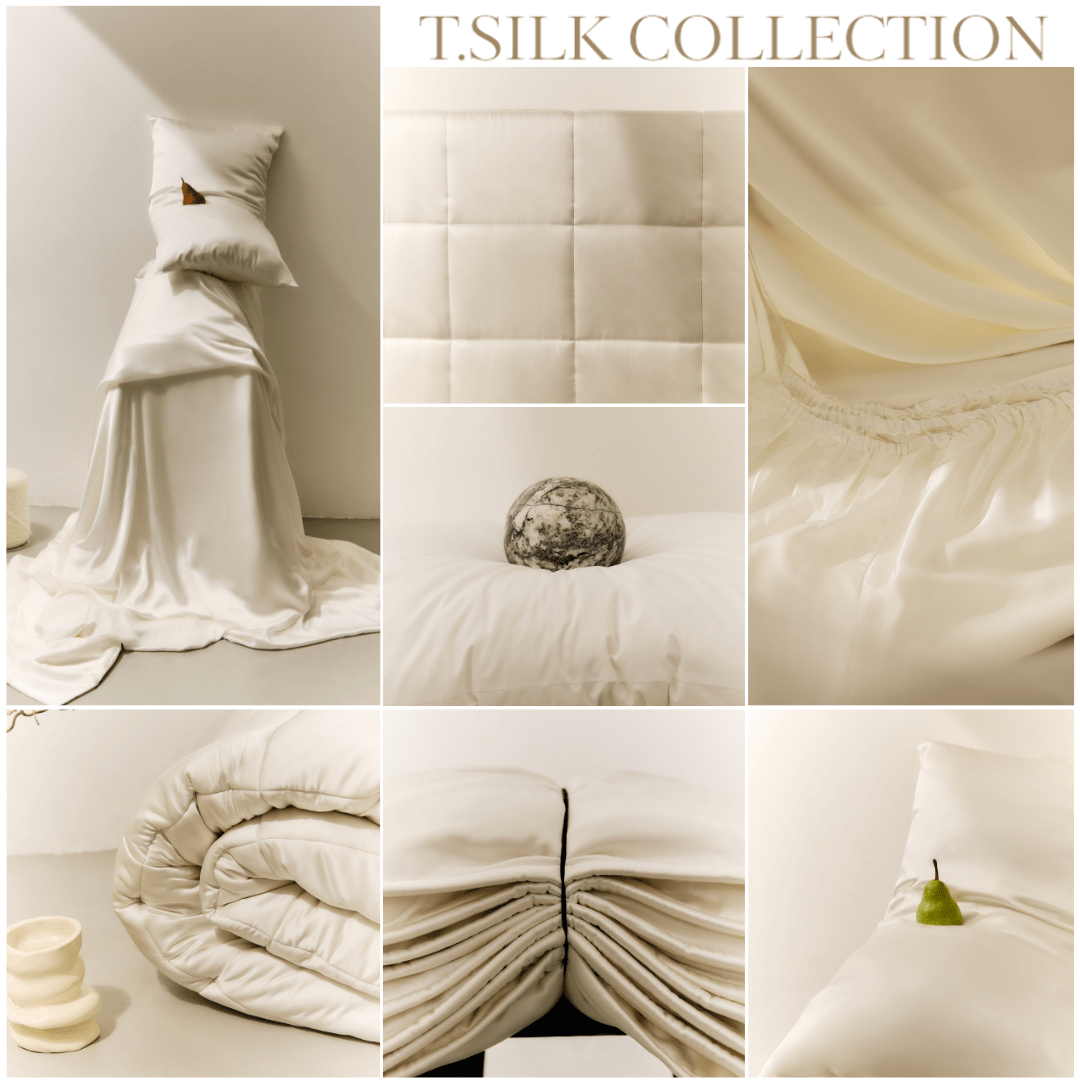
The T.SILK COLLECTION of high-quality micronSilk bedding is based on the use of silk in a highly specialized sector—the sleep system—where only 100% silk can guarantee a range of highest properties:
- Comfort, warmth, and breathability
- Naturalness and environmental protection
- Health and well-being
- Circularity and eco-design
These are products made of 100% natural silk: