
The Silk Yarn

The Silk Yarn
A silk yarn or a silk thread or a silk filament represents the first finished product within the silk supply chain that starts from the cultivation of the Mulberry tree up to the production of the silk cocoon. Yarn and filament or thread, although perceived as similar in their meaning, represent two different products but in common parlance they tend to be used interchangeably
What is a Thread, What is a Filament
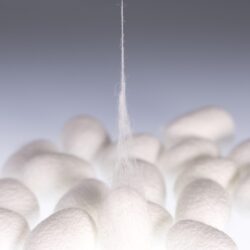
Technically, silk thread or thread of another natural, synthetic or artificial fibre is defined as a cohesive structure formed by continuous filaments of textile fibres that have unlimited lengths and that are placed in parallel formation, more or less twisted, in order to form a single element, defined as continuous thread or filament
What a Yarn is
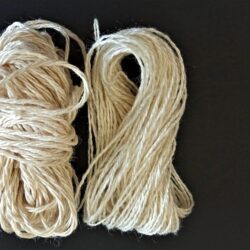
Technically, silk yarn or yarn of another natural, synthetic or artificial fibre is defined as a continuous linear structure whose structure is formed by discontinuous fibres that would not, independently, have characteristics such as to form a single element. These fibres, of different lengths, are kept cohesive through their parallelisation and homogenisation accompanied by a twisting action.
What the difference between a yarn and a filament is
The term Thread or Filament refers to those textile products formed by one or more filaments having the characteristic of being continuous (consisting of continuous threads).
The term yarn refers to those textile products that are composed of discontinuous filaments that do not have a continuous development of fiber.
Silk is the only natural fibre capable of creating:
- a silk thread with continuity in the fibre
- a silk yarn resulting from the processing of discontinuous fibres
What the characteristics of a yarn or thread are
The characteristics of a yarn or thread depend on a considerable number of variables:
- the nature of the fibre
- the chemical/physical characteristics of the fibre
- the cohesion methods of the individual fibre elements
- the bonds between the individual fibres
- the processes from which the initial combed sliver or ribbons are obtained
- the spinning facility system, twists, torsion and effects
The type of fibre represents the fundamental element in order to define the obtainable quality level.
The analysis of the quality of a yarn cannot ignore the evaluation of the significant differences that exist between natural silk fibres and synthetic and/or artificial fibres from the point of view of naturalness, resources used and/or wasted, sustainability, substances that can be released and the level of pollution during use and at the end of their life
Thread and Yarn – The geometry of the fibre
When we talk about the geometry of a fibre, we mean the measurement/evaluation of two of its fundamental characteristics:
- fineness
- length
The geometry of a fibre determines and conditions one of the main characteristics of a yarn and a thread: its count
Filament and Yarn – The Fineness of the fibre
The fineness of a fibre determines, regardless of the transformations (combing, spinning, weaving, finishing, packaging), that the material will undergo to arrive at yarn and then as a finished product, some characteristics of hand and softness.
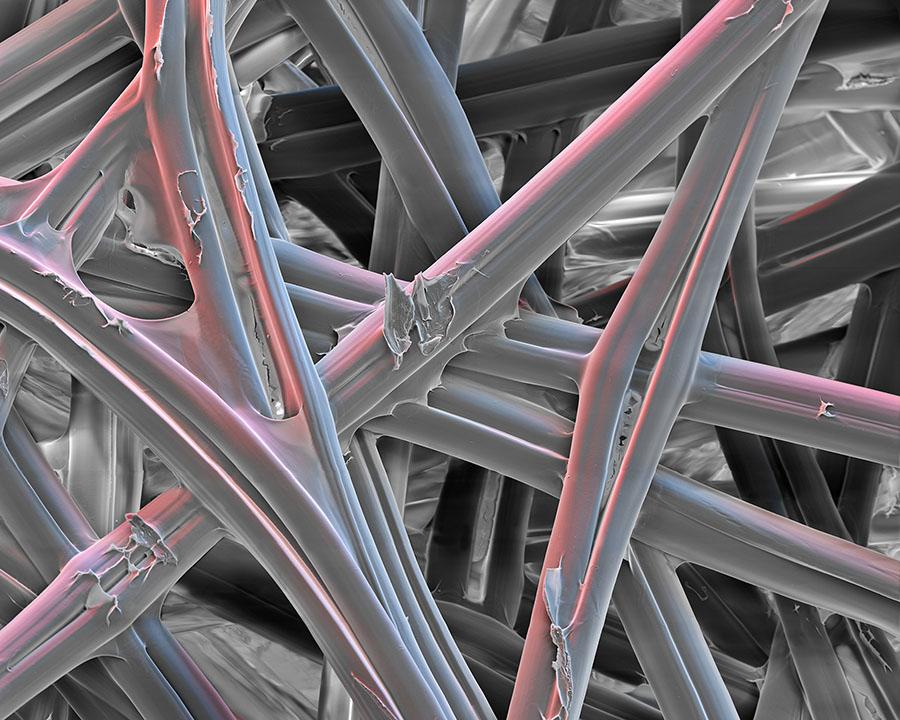
What is the fineness of a fiber
Fineness is a quantity that measures the average of the diameter of the single fiber
Fineness is calculated in microns (µ) which corresponds to a thousandth of a millimeter.
The measurement standard is defined by the English Bradford table (defined as the Bradord System) and is traced back to a specific wool production sector in the English city of Bradford, near Leed in England.
The measurement system calculated the number of skeins with defined characteristics, (560 Yards of yarn equal to 416.96 meters), that can be produced with a given quantity of fiber, (1 pound equal to 453 grams), in raw combed yarn of a predefined fineness
Standard fineness means a thread that has a count equal to a denier equal to 0.05 grams
What is the count of a yarn
The count of a yarn represents a measurement, (the count), that tries to overcome the not always simple determination of the section of a fiber in the different cases in which it is subjected to traction forces and internal structural deformation, making it most of the time non-circular
The count of a yarn represents, in different ways and with different scales, the ratio between length and weight, (direct count)
The indirect count represents the ratio between weight and length
Silk Yarn – Fineness and softness
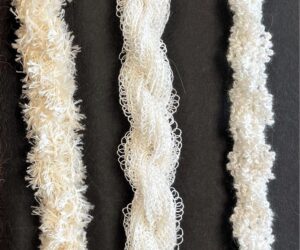
Silk is the only natural fiber that can give rise to the production of a silk thread and a silk yarn.
Silk is the only natural fiber that can be considered a microfiber
The versatility of being able to be transformed into either a natural silk thread or a natural silk yarn and the fact that it is a microfiber, allows for the enhancement of a series of properties (brightness, lightness, weightlessness, ability to adapt to the morphology of the body), that only silk fiber can boast. This translates into the possibility of obtaining a silk yarn or a natural silk filament with very high quality levels in terms of softness and fluffiness as well as creating innovative and exclusive color effects and iridescent shades.
Natural fibers compared – Fineness and softness

Every year, the production and assignment to various fashion brands of natural fibers with particular and excellent finesse is regularly announced by the media. Natural fibers of animal origin (Wool, Cashmere, Vicuna, Yak) that from selected farms, reach very low levels of fineness, synonymous with very high quality levels.
These are particular and limited productions, usually a few hundred Kilograms with fibrous diagrams that can range from 10.5 to 13 microns (for a comparison, the Micron of human hair ranges from 40 to 90 microns)
The uniqueness and excellence of silk microfiber
Silk fiber is a natural fiber with a fineness that with regular consistency over time varies from 8 to 11 microns.
This allows, within the wide range of continuous and discontinuous silk fiber products, to have a production of silk yarn or silk thread that, in addition to having excellent mechanical and chemical/physical, thermal and light and beauty properties, are equipped with unique and unparalleled characteristics of softness, lightness, soft touch. Characteristics that, together with other peculiarities, make silk fiber ideal for:
- innovative projects and products,
- for combinations with other materials,
- for high-performance silk padding and
- collections of exclusive bed linen
- the first 100% silk duvet in natural microfibre