
Fiber, padding, and odor-resistant fabric: Silk, the natural material that eliminates unpleasant odors

Fiber, padding, and odor-resistant fabric: Silk, the natural material that eliminates unpleasant odors
The presence and formation of unpleasant odors in our clothing, accessories, and bedding is a common and annoying problem. Having odor-resistant fabric, fresh padding, and breathable fibers permanently solves this unpleasant problem.
Unpleasant odors in fabrics, padding, and textile fibers in general are caused by a combination of different factors that can be summarized as the interaction between bodily secretions and microbial metabolism.
Understanding the interactions between skin, sweat, and fabrics is essential for choosing, for example, bed linen made with odor-resistant fabric or with silk odor-resistant padding that effectively and lastingly prevents unpleasant odors.
Why there are bad odors on textile fabrics
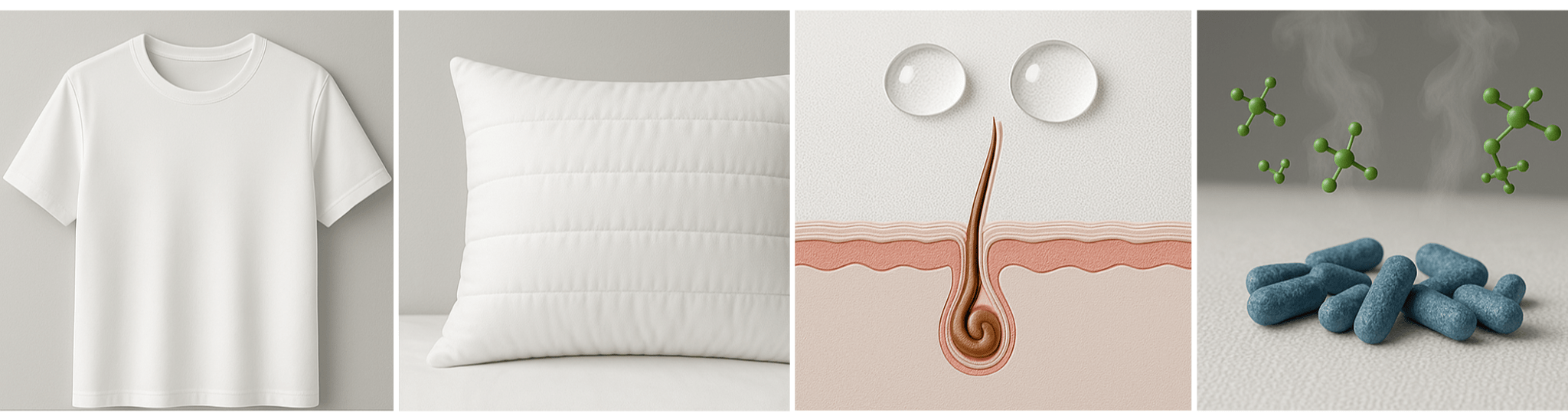
Unpleasant odors in fabrics are caused by:
- The characteristics of the fiber and/or fibers that make up the fabric
- The fabric’s construction and manufacturing
Natural silk odor-resistant fabric and 100% natural silk odor-reducing bed linen act on these elements, preventing the accumulation of organic substances and bacterial growth.
Each of these aspects, along with the use of clothing made with odor-resistant fabric that do not retain odors, can not only create unpleasant psychological and social situations but also compromise well-being, health, and comfort.
Understanding the variables at play allows you to more consciously choose the best odor-resistant fabric for your bedding, technical clothing, or padded jacket, allowing you to face the day with peace of mind.
The presence of bad odors in fabrics or padding is not just a social problem but a manifestation of the intrinsic qualities of clothing, bed linens in terms of:
- Comfort and breathability
- Health
Bad odors of clothes and fabrics
The bad odor of clothes is the end result, perceptible to our senses—the sense of smell—of a series of characteristic elements and subjective and objective interactions:
- Sweat
- Sebum
- Microbes present on the epidermis
- Fabric fibers
Sweat
Human sweat is odorless in its original form. It is its decomposition, combined with the presence of greater or lesser amounts of sebum, that generates volatile, malodorous compounds characterized by more or less intense odors.
Sweat, in the form of an aqueous solution or water vapor, is produced in response to increases in internal temperature for the purpose of stabilization. Sweat is produced by a series of differentiated glands:
- Eccrine glands (salts, urea, and lactic acid)
- Apocrine glands (organic material, lipids, and proteins), most commonly found in the axillary and genital areas.
These types of secretions, combined with sebum, once deposited on the skin and tissues in direct contact, are an ideal substrate for bacterial proliferation and the resulting production of various odorous substances.
Microbial activity and volatile substances
Once sweat and sebum are deposited on the skin and tissue, depending on the microclimate and environmental compatibility, the various organic elements are metabolized by different bacterial strains:
- Staphylococcus hominis,
- Corynebacterium spp.
- Micrococcus spp.
These bacteria are responsible for the formation of odors in bed linens made without odor-resistant fabric, and in technical and sportswear by triggering cellular processes that generate volatile organic compounds (VOCs), which are immediately detected by the olfactory receptors:
- Short-chain fatty acids (e.g., isovaleric acid)
- Sulfur compounds (e.g., thioalcohols)
- Amines (e.g., putrescine and cadaverine)
VOC concentrations and therefore the intensity of the odor depend on:
- The quantity and quality of deposits on skin and fabric (subjective),
- Personal cleanliness, which influences the number of bacterial microorganisms
The use of odor-resistant fabric or odor-reducing padding made with silk fibers hinders bacterial adhesion, reducing the production of malodorous compounds
Odors and fabrics carachteristics
The nature of the textile fiber that makes up the fabric and its construction profoundly influence:
- Bacterial proliferation
- The development of bad Odors
The best odor-resistant fabric must:
- Regulate the temperature, avoiding sudden temperature increases that create an ideal microenvironment for bacterial growth
- Not create pockets of humidity
- Release excess water vapor quickly
- Be breathable
- Have a chemical structure that does not favor the adhesion of bacteria and organic sebum
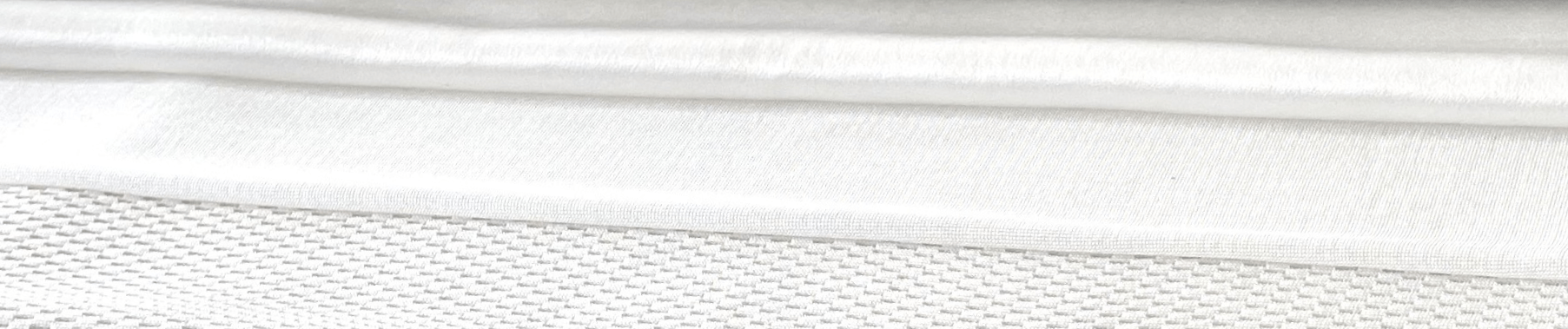
Odor-reducing silk for Odor-resistant fabric: Unique properties and benefits
There are a series of important chemical and technical characteristics that make odor-reducing silk the best material for odor-resistant fabric, the best fiber, the best material for eliminating bad odors, a true second skin:
- Perfect thermoregulator. Stabilizes body temperature.
- Breathable. Promotes ventilation and the passage of moisture from the body to the outside.
- Prevents moisture buildup. Fibroin captures, retains, and quickly releases excess moisture.
- Minimal bacterial adhesion. A completely smooth filament, without microspaces where bacteria, mold, or fungi can nest.
- Hydrophobic. Fibroin is a hydrophobic protein that hinders bacterial adhesion.
- Minimal lipid retention. It has no affinity with the lipids in skin sebum that feed odor-producing bacteria.
- Release of odors during washing. Its extreme slipperiness allows residual odors to be removed during washing, preventing subsequent reactivation due to increases in body temperature.
Comparison of Silk for Odor-Resistant Fabric with Other Fibers and their Fabrics
Silk Vs Poliestere e Nylon
Polyester and nylon are not ideal fibers for producing odor-resistant fabrics; they are highly hydrophobic and do not absorb moisture.
They bind and accumulate a lot of sebum, encouraging bacterial growth.
They are not breathable.
The odorous compounds bind stably and permanently to the aromatic groups of PET, making them almost impossible to remove even with intense washing and reactivating every time they come into contact with the skin.
Both polyester and nylon promote the growth of bacterial biofilms that are resistant to washing if not treated (chemically) with antibacterial finishes.
On the other hand, silk is naturally a self-cleaning, breathable, and thermoregulating fiber for odor-resisting fabric, ideal for sportswear, underwear, and bed linens.
Silk Vs Cotton
Cotton absorbs considerable amounts of liquid but is unable to release it, creating wet or damp areas.
It absorbs lipids and, even after washing, ammonia- or organic acid-based odors.
It promotes bacterial growth if not properly dried or sanitized.
Silk quickly eliminates moisture and odors while maintaining freshness, creating odor-resistant fabric that maintain this characteristic even after numerous washes.
Silk Vs Wool
Wool and similar fibers such as cashmere or vicuna inhibit the proliferation of microorganisms thanks to their keratin protein, which has an acidic pH and a high sulfur content.
Its porosity and the numerous imperfections (scales)on the fiber’s surface favor the breeding grounds for fungi, bacteria, sebum, and moisture, making it a poor fiber for odor-resistant yarns and fabrics.
Silk, with its smooth, non-porous surface, offers no refuge to microbes, mold, and fungi. Odor-resistant fabrics and odor-resistant padding are naturally hypoallergenic.
Silk Vs Linen
Linen is hygroscopic: it absorbs large quantities of liquids and contaminants.
Its radium when drying prevents major odors.
In humid environments, it prevents the dispersion of VOCs, mold, and microbes.
Silk and the odor-resistant fabric made from it are water-repellent and repel grease, sebum, and mold even in critical conditions.
Silk for odor-resistant fabric: a conscious choice for health and well-being
Consciously choosing silk as the exclusive fiber for odor-resistant fabric, odor-repelling yarns, and odor-repelling padding means investing in comfort, hygiene, and daily well-being.
Its unique breathable, thermoregulating, and antibacterial properties are the ideal natural solution for technical garments, underwear, bedding, and padding.
Unlike synthetic or absorbent materials like cotton and linen, silk effectively reduces odor formation by preventing bacterial growth.
If you’re looking for an elegant, natural, and highly functional material, anti-odor silk fabrics are the perfect choice for:
- lasting freshness and superior quality,
- body and health care,
- environmental protection and sustainability,
- free from pollutants, a fiber that comes and goes back to nature.